




How to Get the Most from Industrial Cooling Fans
By Grainger Editorial Staff 3/27/26
Industrial cooling fans help mitigate heat stress and productivity loss in demanding environments. This guide explains fan types, performance metrics, and best practices to help optimize airflow, improve worker comfort and maintain safe, efficient operations.
Dangers associated with working in the heat are well-documented. Heat-related illnesses can be debilitating, and production can suffer when workers are overheated. According to a study published in the National Library of Medicine, 60% of construction workers exposed to elevated temperatures see production drops, with even more pronounced declines for older workers. Another study found even cows are less productive when the environment is too hot.
Industrial cooling fans are among the tools available to improve a workspace where an air conditioning system may not be practical, such as a large warehouse, garage, or interior construction site. But to get the most out of these fans, it’s important to know what options exist, what they can and can’t do, and which situations work best for each.
Types of Industrial Cooling Fans
The three most prominent categories of industrial cooling fans are:
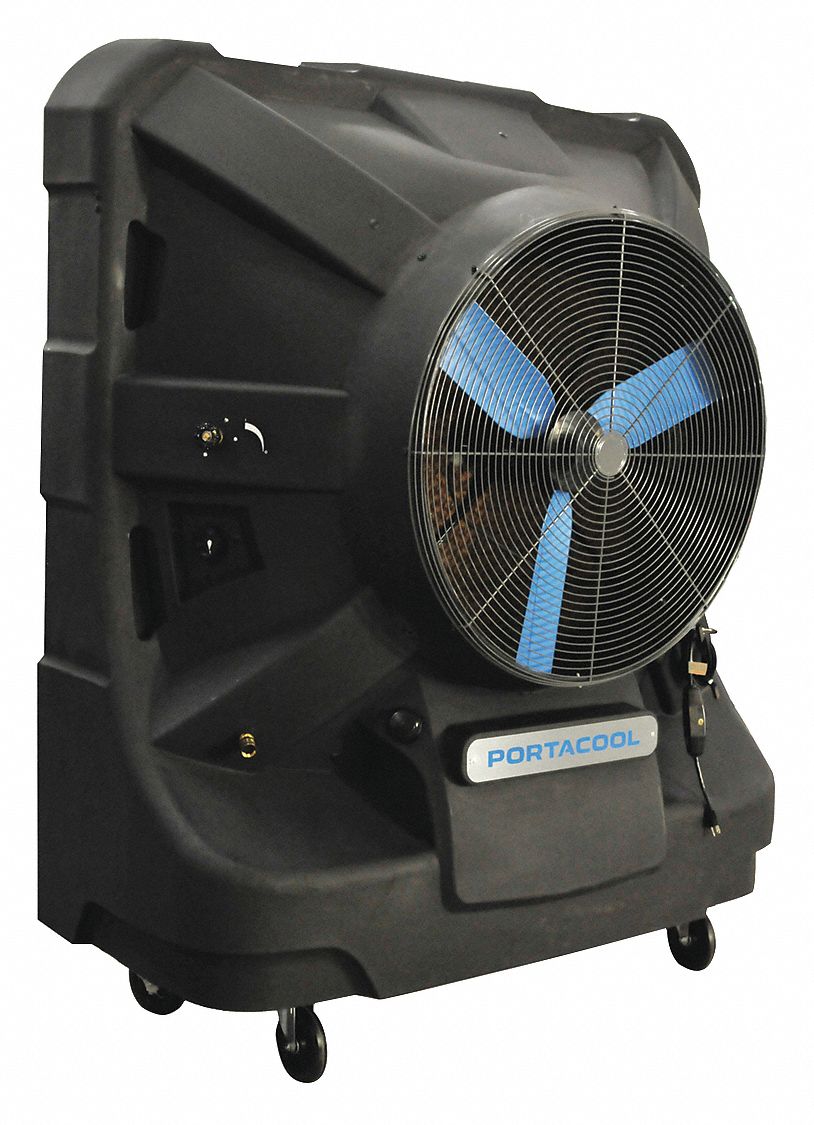
Mobile & stationary floor fans: These can be positioned as needed to direct air flow; mobile fans have wheels for easier re-positioning. Certain varieties are corrosion-resistant, resist sparking or feature a high-visibility yellow finish for high-traffic areas. Some have a blade diameter – measuring the outer tip of one blade to the outer tip of a blade on the opposite side – as large as 8 feet, though most are between 2 and 4 feet.
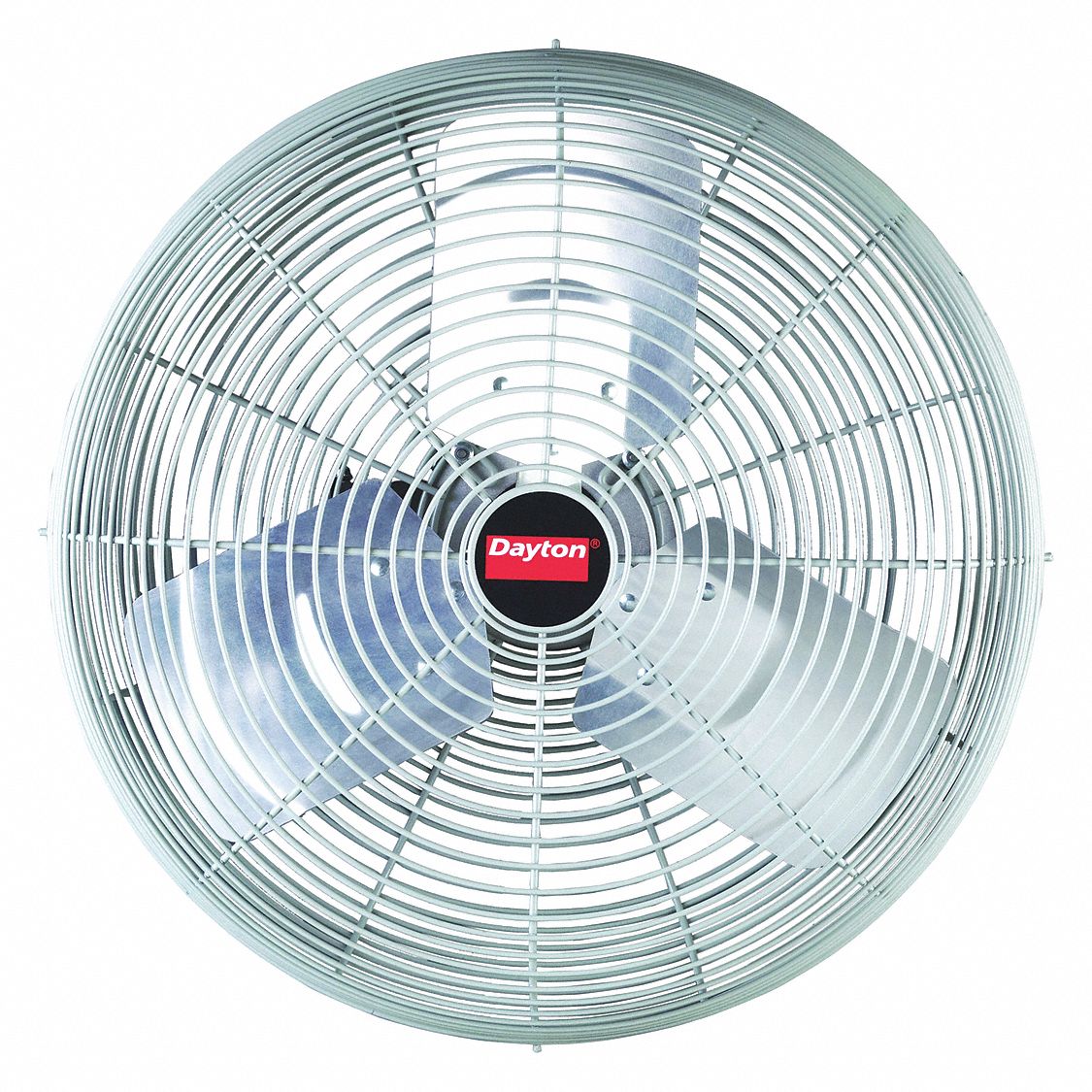
Wall-mount fans: These provide similar heavy-gauge construction to mobile and stationary fans but are mounted to a high, fixed location to stay completely out of traffic. Generally, they have a blade diameter of no more than 3 feet. Corrosion resistance, spark resistance and high visibility are also among the features of wall-mount fan varieties.
Ceiling & High-Volume Low-Speed (HVLS) fans: In a large facility, ceiling fans are built more to circulate air than cool directly. HVLS fans have a blade diameter up to 24 feet; these blades move very slowly to help move air in a large space while producing only a gentle breeze that may not even be felt down below.
Maximizing Effectiveness of Cooling Fans
When choosing fans, one important factor is the velocity at which they move the air, expressed in feet per minute (fpm). Product data for many fans includes this rating, often at different distances from the target location. For example, a fan might have a 500 fpm rating at 10 feet but that will drop to 300 fpm at 40 feet.
A different rating is cubic feet per minute, or cfm. It measures volume of air moved, rather than velocity. Most wall-mount and stationary fans have a cfm rating of under 10,000, though some can climb to 20,000 or more.
Whether you are looking at fpm or cfm, unfortunately there isn’t a strong rule of thumb for the correct rating for a space and each situation is different. However, don’t assume that if one fan of 500 fpm or 10,000 cfm is good, 10 are even better. Mac McCollum, a Field Safety Professional at Grainger, has seen at least one case where doors have been blown open and warehouse shelves disrupted because too many fans were running.
To get the most out of fans, position them to create a flow of air around the facility, rather than streams that will battle each other. Be mindful of any fixed wall-mounted fans, and position mobile and stationary floor fans in such a way to accentuate that flow rather than fight it.
Make it your priority to cool people rather than space. Running a fan continually, especially in a fixed position, simply burns electricity and may not add meaningful relief for employees. Be purposeful with both positioning and timing.
Finally, remember that moving air is important but can only do so much. OSHA points out that air circulation only helps if the air temperature is less than a worker's skin temperature. McCollum said findings from OSHA, the CDC and the National Institute for Occupational Safety and Health estimate that fans by themselves can only reduce the perceived air temperature between 4 to 6 degrees F, depending on factors like humidity and a worker's physiology. The temperature doesn't actually decrease; instead, sweat evaporation and improved heat dissipation change how a worker feels. For extreme heat situations, then, it’s important to combine cooling fans with other controls such as wearables like a cooling neck wrap, hydration and work breaks.
Ceiling fans have a complementary role to wall-mounted and mobile or stationary fans. They can bring hot air trapped in the rafters gently down and mix it with cooler air, helping moderate overall temperature.
Other Considerations for Industrial Cooling Fans
Bringing relief and helping prevent heat stress on the job is not the only thing to think about. You also should know how much noise your fan or fans may create. Noise can be considered dangerous once it reaches 85 decibels. Prolonged exposure at that level could lead to hearing loss and has been associated with a host of health issues.
Many fan manufacturers publish each product’s decibel rating. To reach 75 dBA is not uncommon for a wall mount, stationary or mobile fan and some will reach 95 or even 100 dBA. Most ceiling fans are much quieter. A sound level meter can help you determine exactly how fans affect the sound in your space and whether hearing protection is indicated for the situation.
Industrial cooling fans also might help address condensation on a warehouse floor. McCollum noted that condensation can create a safety issue for forklift tires that are often treadless indoors. A fan might help dry that moisture.
Finally, ceiling fans can also be useful in cold conditions. Gently bringing warm air down from where it collects by using an HVLS can redistribute that air without creating an intense, chilling breeze.
Grainger carries industrial cooling fans for almost any situation, including pedestal fans and misting coolers.
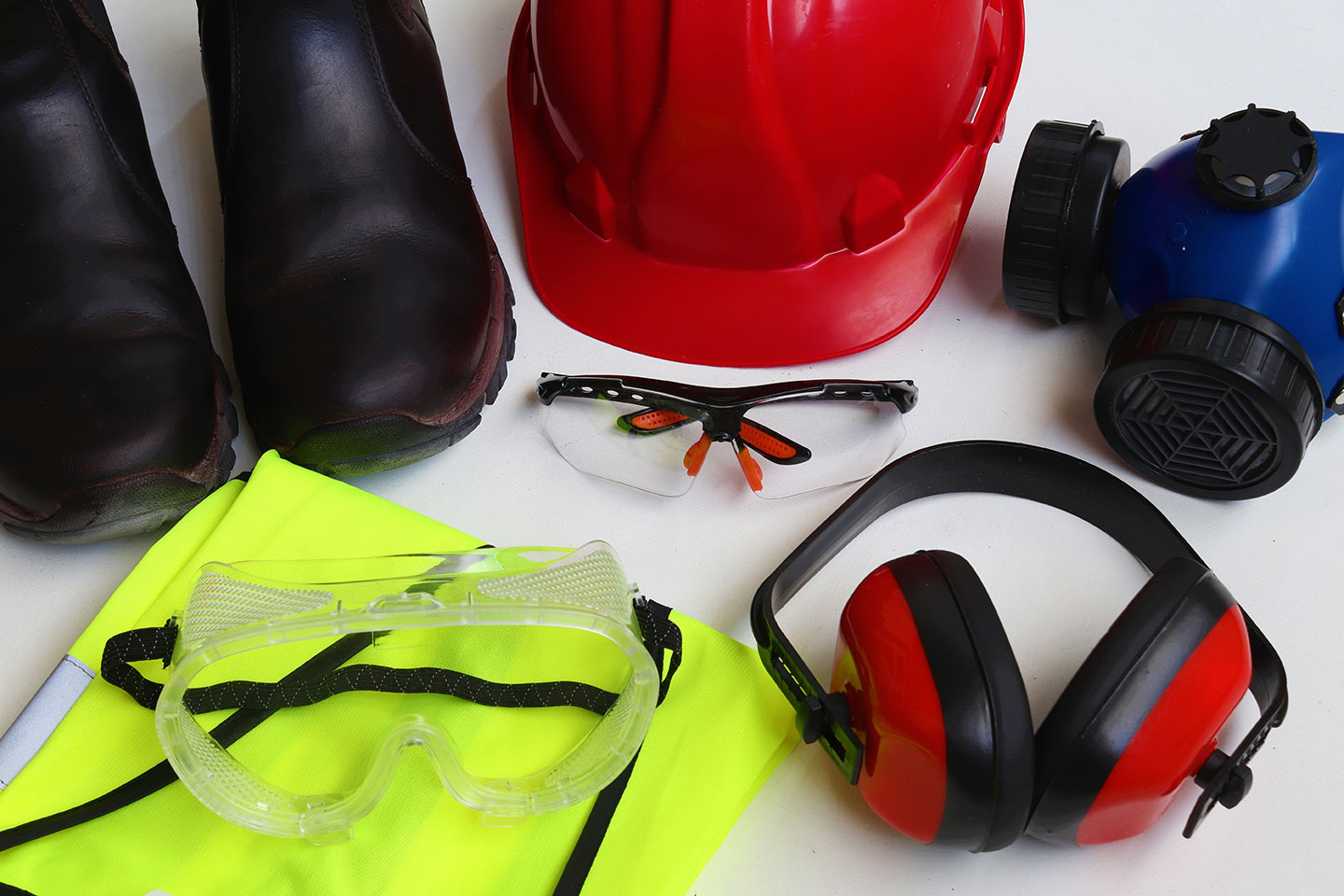
PPE in the Workplace
Safety Quiz: How Much Do You Really Know About PPE?
How well do you know your safety gear? Test your knowledge with our short quiz to ensure you’re up to date with key safety practices.

The information contained in this article is intended for general information purposes only and is based on information available as of the initial date of publication. No representation is made that the information or references are complete or remain current. This article is not a substitute for review of current applicable government regulations, industry standards, or other standards specific to your business and/or activities and should not be construed as legal advice or opinion. Readers with specific questions should refer to the applicable standards or consult with an attorney.


CONNECT WITH US


SIGN UP FOR EMAIL
Get more great content in your inbox.